
Below is an excerpt from the history of the Southeast Iowa Symphony Orchestra, written by Robin Schweizer. To read the entire history, click here.
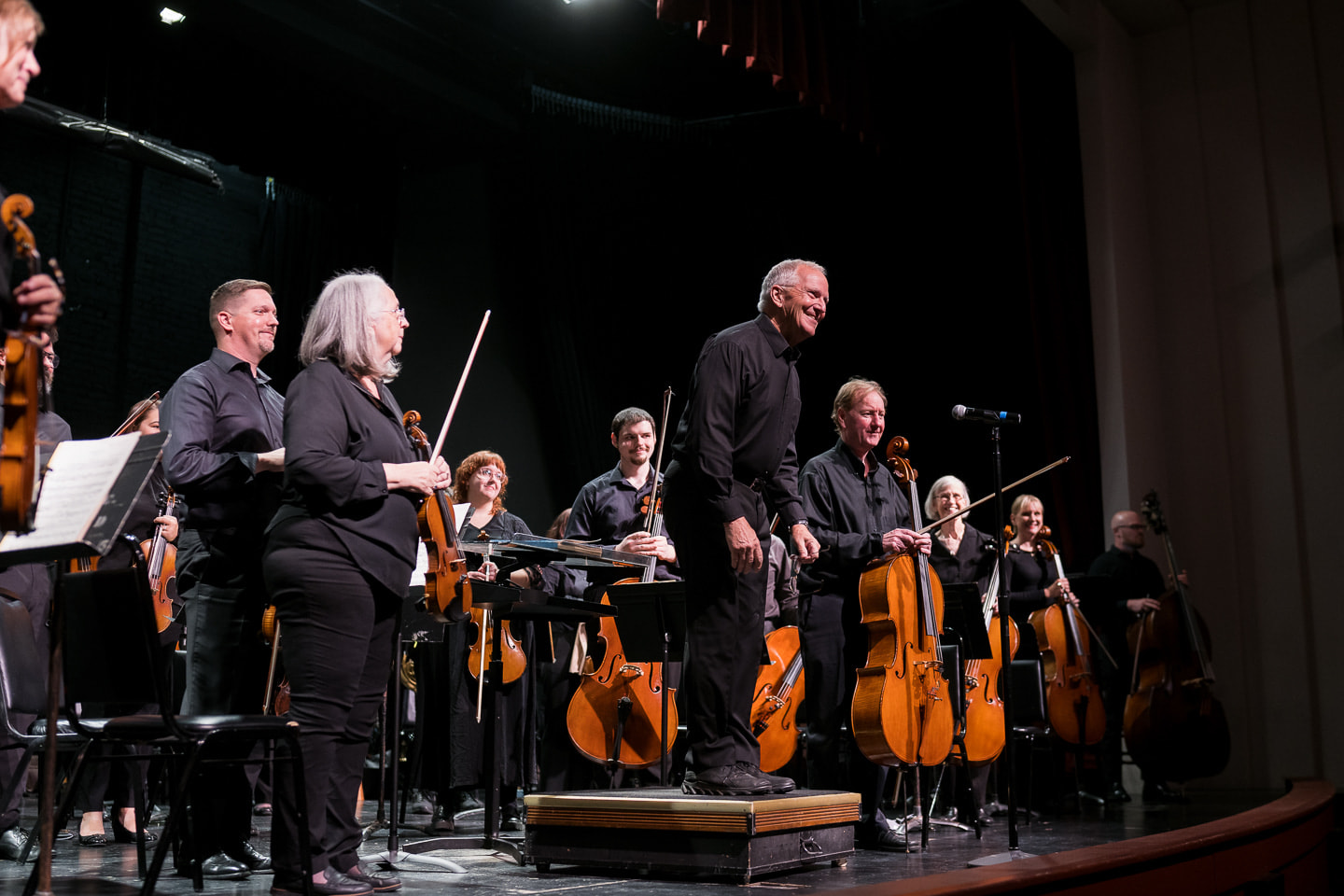
The Symphony’s First Ten Years - written by Robin Schweizer (Burlington) By mid-20th century most of us had returned home from World War II. We had enthusiastically met old friends and gradually resumed living sanely. We had married or become reacquainted with our spouse and children and with our parents, who had reluctantly sent us to war.
Those of us, who were musically gifted, sought an outlet for our talent. We sang in church choirs, in barbershop quartets and, interestingly, we frequently played our instruments in small trios, duets and quartets for our personal pleasure. We participated in the city band concerts in Crapo Park on Sunday evenings. We avidly attended and supported our public school band, orchestra and choral recitals. We welcomed live music.
Civic Music Association concerts (for 47 years), organized and sponsored by Mrs. William (Hazel) Witte, and the Civic Music Board were offered by subscription and filled a near void of professional live entertainment. Members were surveyed annually for their musical preferences for the coming year -- usually an instrumentalist, a symphony, a vocalist, possibly a ballet, a musical -- the choices were endless, if affordable and available.
In the early fifties we were introduced to a magnificent menu of musical presentations through television and brought to us a myriad of cultural and music educational programs which further broadened our understanding and knowledge and enriched our lives.
During this mid-century adjustment following one war and soon to be involved in another, colleges and universities made room for a deluge of veterans returning to campus under the GI Bill. In all probability, some were students of Professor Howard Lynch, head of the string department at Parsons College (Fairfield) and a major factor in the formation of a small area orchestra comprised of 35 college and area musicians. Mr. Lynch was selected its first conductor. There was one concert in 1951 presented in the Iowa Wesleyan College chapel on October 19th. Mr. Lynch, pursuing his doctorate, left Parsons in early 1952 and the now titled Southeast Iowa Symphony Orchestra was led by Dr. Oscar Butler of the music department at Iowa Wesleyan College (Mt. Pleasant). Dr. Butler conducted for two seasons, presenting three concerts yearly in Fairfield, Mt. Pleasant and Burlington. The following two years Richard Lee Morse, of the Cornell College (Mt. Vernon) Music Department was chosen director and following that, became permanent conductor until the end of the decade. By this time, the orchestra had grown from 35 to 65 musicians.
Mr. Morse held music degrees from the University of Nebraska and Baylot University and has been associated with the Lincoln, NE Symphony, the San Antonio, TX Symphony and has performed with the Detroit, MI Symphony and the Philadelphia, PA Symphony orchestras. In 1956, Mr. Morse was offered a position as a public relations officer by symphony cellist Milton Sandell, president of Benner Tea Company. This move to Burlington of Mr. Morse and his family made it much easier for him to meet with potential orchestra players as well as Burlington and area service and civic clubs to explain the orchestra’s visions, its opportunities and its potential value to southeastern Iowa.