
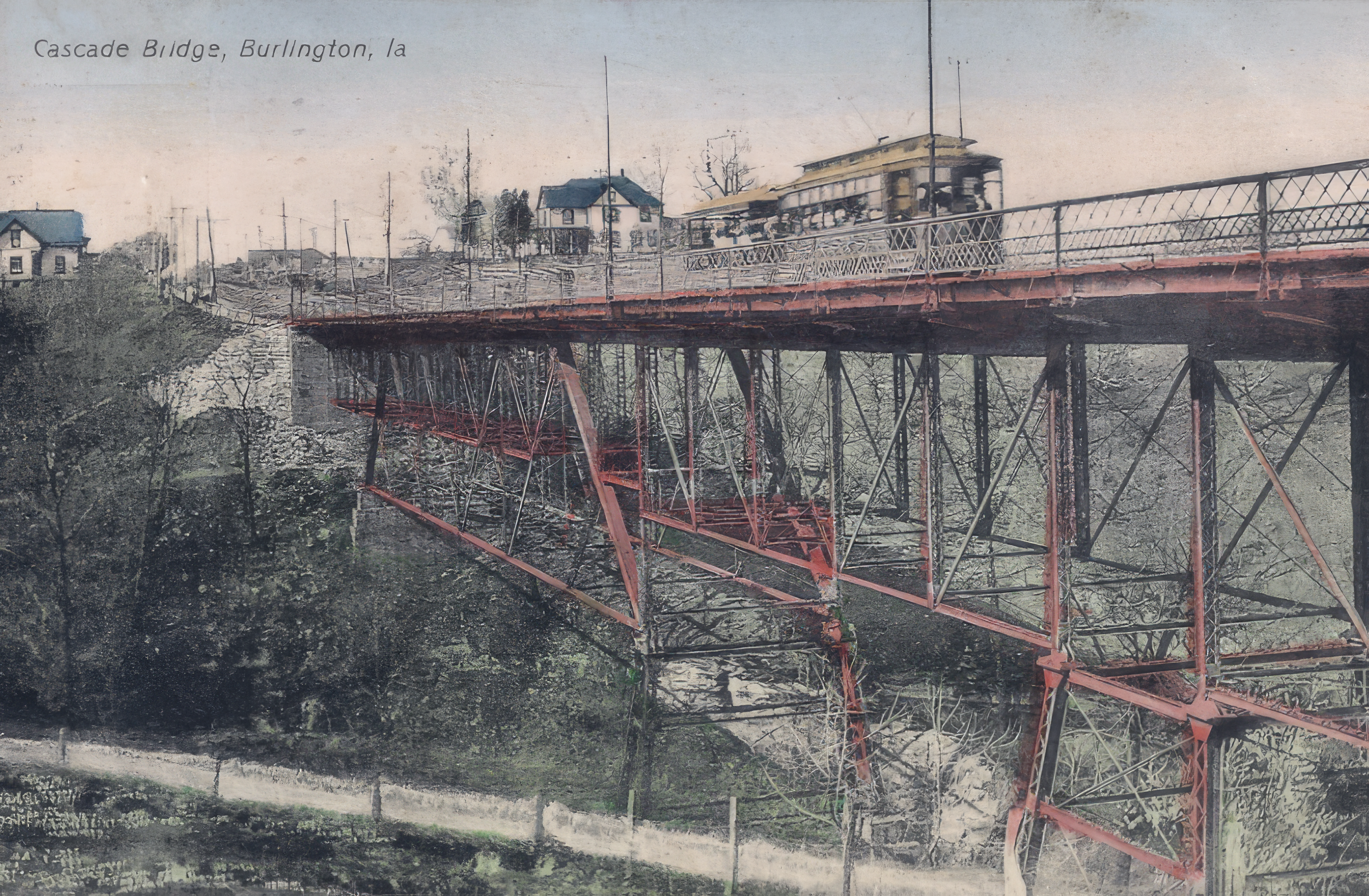
The following history of the Cascade Bridge is compiled from “History of the Construction of Cascade Bridge (January–September 1896)” by Milt Paule, which draws on contemporaneous reporting from The Burlington Gazette and The Burlington Hawk Eye.
Cascade Bridge emerged from months of debate, civic urgency, and public passion, all tied to Burlington’s desire to connect its growing city with its newest treasure: the park at the city’s southern edge, now known as Crapo Park.
According to the Paule piece, “from the very beginning of the Park at the south end of Burlington there was talk of extending South Main Street to make the Park more accessible to the public.” The challenge was obvious. Between downtown Burlington and the park lay the deep Cascade ravine. Reaching the park by private carriage was possible, but city leaders knew the future depended on public transportation - specifically the electric streetcar.
The Walsh Brothers (Charles and E.C.) of the Burlington Street Railway and Electric Company “prefer South Main Street for extension of the street car line to the new park if there is any possible means of getting around or across Cascade ravine.” A bridge, rather than a winding detour, was seen as the most direct and practical solution. As Paule quoted from the newspapers, “Nobody denies that the bridge is a long-needed improvement,” even if opinions differed on how it should be built.
Alternate routes were proposed, including one along Madison Avenue, but resistance quickly formed. According to the Paule piece, E. C. Walsh bluntly dismissed that option, saying, “it will be out of the question for us to extend the street railway on the Madison road.” The reasons were financial and practical: limited ridership, the expense of double tracking, and opposition from residents who valued Madison Avenue as a scenic drive rather than a transit corridor.
Another proposal suggested routing the streetcar along a section line between Main Street and Madison Avenue. Property owners even offered donated land to reduce costs. Yet, these ideas struggled to gain traction, especially as Burlington faced a looming deadline: Iowa’s state semi centennial celebration, scheduled for the fall of 1896 and to be held in the new park.
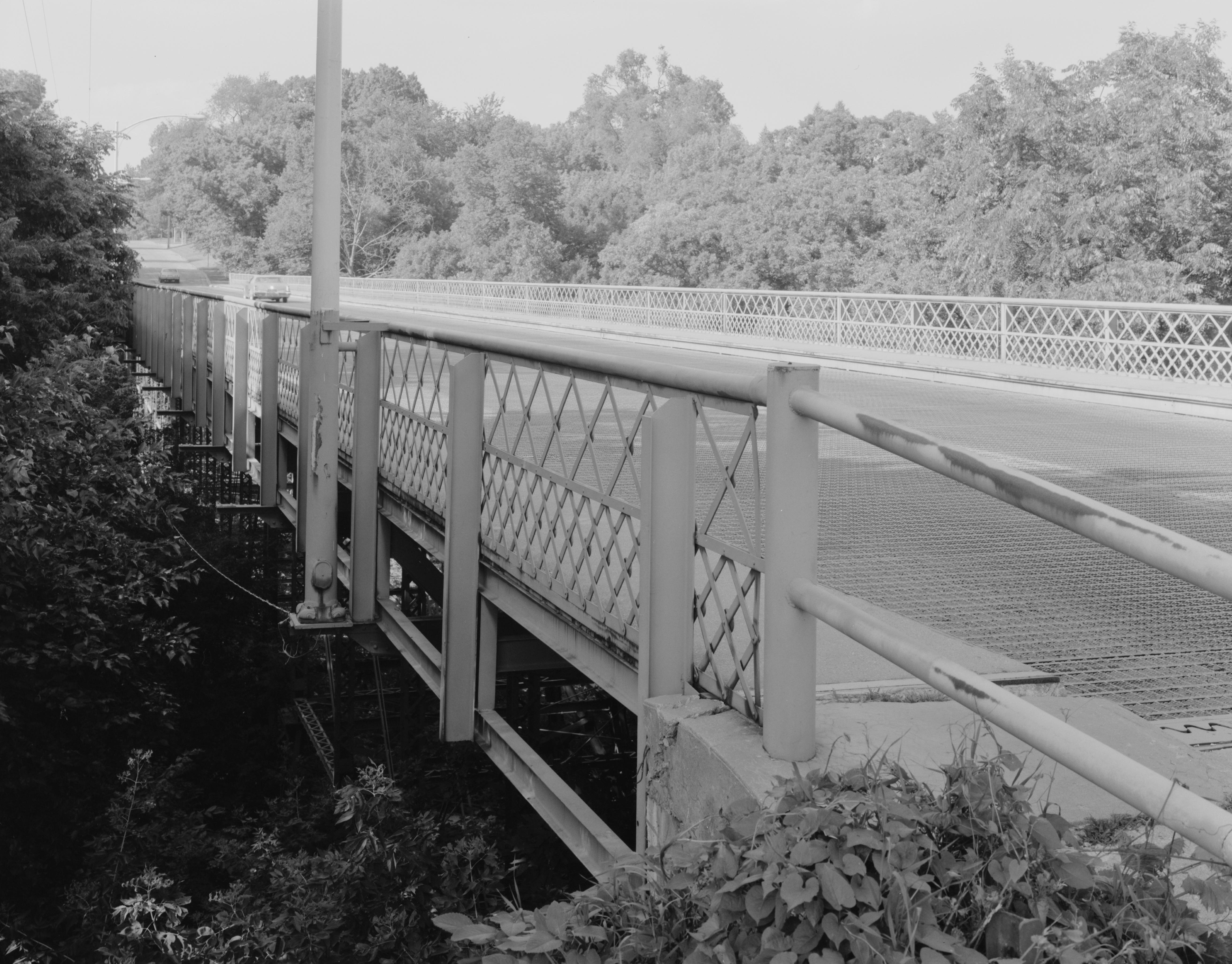
That celebration became the decisive factor. As Paule noted from an April 5 Hawk Eye article, “the great body of those who will resort to the park must depend upon public conveyance, the electric car, to take them there.” Without a direct, double track route to the park, Burlington risked embarrassment on a statewide stage. The paper emphasized that “definite action must be taken at once,” because park improvements and celebration plans depended on settling the route question.
Public meetings soon followed, and the pressure mounted. The street railway company promised that if the city would build a bridge capable of supporting a double track, it would provide all the cars needed to move crowds efficiently. Estimated bridge costs ranged widely, sparking intense debate over whether Burlington could afford such an investment and what form the bridge should take.
Engineering discussions even turned philosophical. According to the Paule piece, one proposal favored longer earthen fills and shorter bridge spans because fills “would never require a dollar of cost for maintenance,” while iron bridges demanded ongoing care. Another plan relied more heavily on ironwork, sending much of the cost outside the local economy. The debate reflected a city thinking not just about construction, but about long term stewardship.
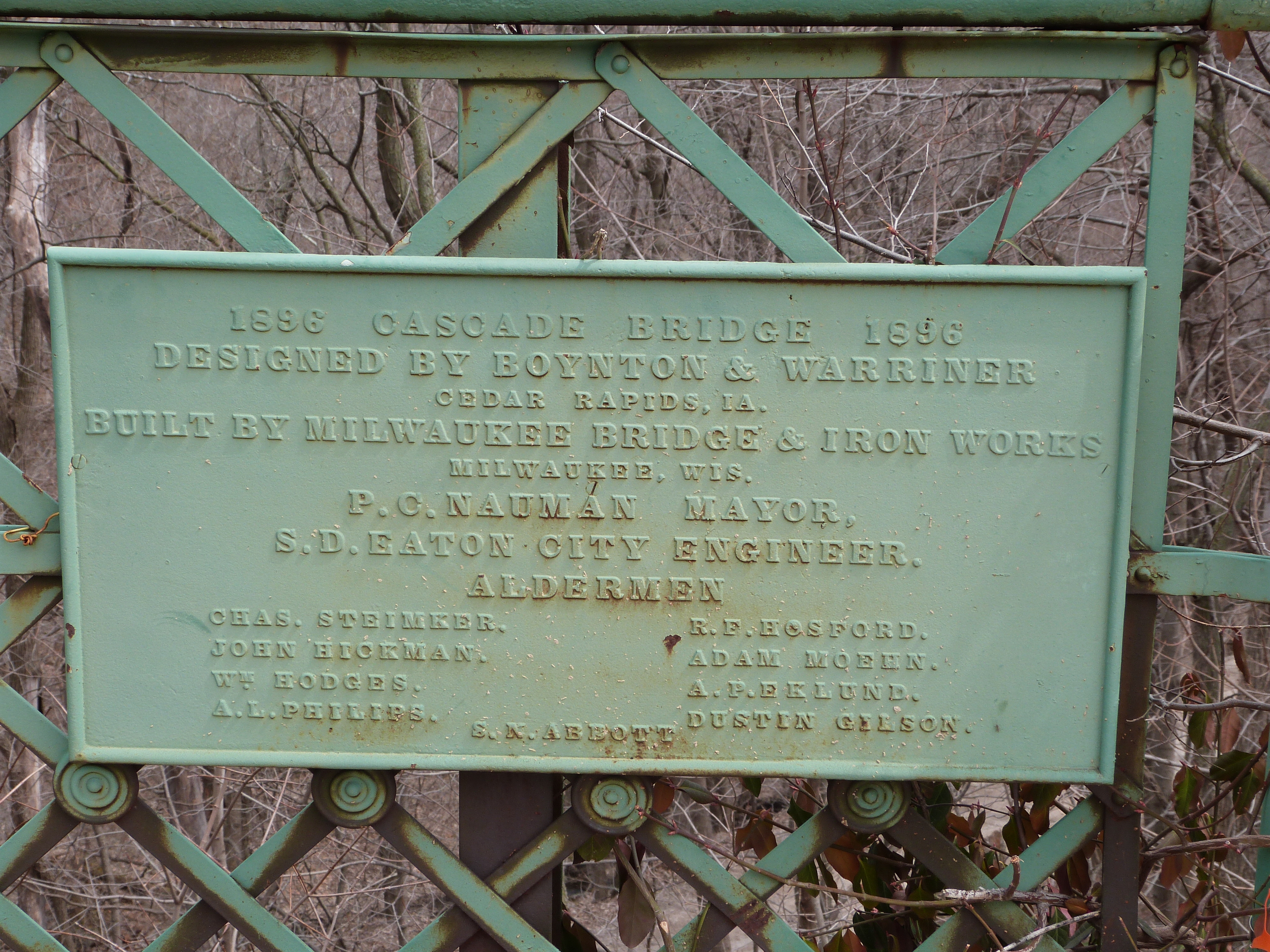
Momentum finally shifted in early May. Engineers from Boyington and Warringer presented concrete plans and timelines, and City Engineer Dwight Eaton outlined a steel bridge roughly 460 feet long, with space for streetcars, vehicles, and pedestrians. According to Paule, Eaton stated the bridge could be completed for about $16,000 within 90 days. When the city council voted to proceed, “a hearty applause from the audience filled the council chamber,” signaling strong public support.
With that vote, the decision “settled all controversies as to routes to the park” and cleared the way for both park development and the semi centennial celebration. Bids were solicited, and despite lingering opposition and a legal attempt to halt construction through an injunction, the project moved forward.
On June 11, 1896, Mayor P. C. Naumann formally signed a contract with the Milwaukee Bridge and Iron Company. According to the Paule piece, the agreement required completion by September 1, with penalties for delay. The city undertook construction of the abutments and piers, while the steel superstructure was fabricated off site.
Construction brought its own challenges. Delays in cement deliveries temporarily slowed progress, forcing layoffs and schedule adjustments. Stone for the bridge was quarried directly from the Cascade ravine, and crews worked long hours once materials arrived, sometimes planning multiple shifts per day to regain lost time.
By late summer, the bridge began to rise dramatically above the ravine. According to Paule, observers noted that the structure “will be very high above the ravine and will be one of the points of interest in the city.” One memorable incident even added a touch of humor to the project, when a wagon hauling bridge iron tipped over the bluff edge. Spectators feared disaster, but the mules survived, prompting relief and laughter as one wandered off to graze below.
In September, Burlington’s patience paid off. On September 22, 1896, the Cascade Bridge opened to wagons, carriages, and work crews. That same afternoon, “in a cold drizzling rain,” the first motor car crossed the bridge with rails aboard. The following morning, September 23, the first passenger streetcar made the crossing, carrying the mayor, city council, and members of the press.
The Cascade Bridge was more than an engineering achievement. It symbolized Burlington’s determination to invest in public spaces, embrace modern transportation, and present itself confidently to the rest of Iowa. More than a century later, the bridge remains a lasting reminder of a moment when the city chose connection, progress, and civic pride—spanning not just a ravine, but an important chapter in Burlington’s story.